
Engagement model
See what the brain absorbs before you commit.
Pick the function. Set the volume. Watch the workload move.
Select a function
Human hours absorbed / mo
600 hrs
≈ 18 min per claim
Decision time
2 daysminutes
Before → once operated on the brain
Exceptions to humans
~20%
Routed to a person who owns the call. The calls that matter.
Hours model vs. Operated model
Based on live operating data from Go Digit (insurance) and HCL Healthcare (member admin). See the case studies →
Proof: Go Digit
Deal.
Scoped to an outcome, not to hours. Before we run a function, we agree the metric it exists to move. That named outcome is the engagement.
Claims decided in minutes, members adjudicated same day, users approved in their first session. Everything we build and operate serves the metric we named before we started.
Based on live operating data from Go Digit (insurance) and HCL Healthcare (member admin). See the case studies →
How it works
The engagement model in four principles.
Not a rate card. Not a retainer. Not a bench. An operated function, accountable to one named metric.
(001)
Scoped to a named outcome
Before we start, we agree the metric the engagement exists to move. Decision time, leakage, activation. It is written down, and it is what we report against.
(002)
Everything included
The brain, the agents that run on it, and a person who owns the calls that matter. One engagement, one accountable team.
(003)
A partnership, not a handover
You get an operated function, not a project that ends with a deck. The brain keeps running. The owner stays named. The function keeps improving.
(004)
The outcome compounds
Every exception the brain sees makes the next decision better. The metric keeps moving as the brain learns your edge cases.
The category
What this is, against what you know.
(001)
Not a copilot.
Copilots help your people work. They do not do the work.
(002)
Not a bench.
Staff augmentation rents you hours and rebuilds context every time.
(003)
Not a chatbot.
Chatbots answer questions. They cannot run a process.
Functions we run
What we run, and the outcome each one is scoped to.
Four live verticals, each operated against a named, measurable outcome. Your people own the calls that matter.
(001)
Go digit
Insurance operations
Claims & underwriting, operated.
Pre-inspection, underwriting decisions, endorsements and KYC run on your claims brain. Exceptions route to a person who owns the call.
Live reference: AI-assisted pre-inspection, Camunda/DMN underwriting decisions, endorsement lifecycle and KYC.
Outcome: claims decided in minutes, leakage down.
(002)
HCL Healthcare
Healthcare administration
Member & benefits admin, operated.
Member onboarding, benefits administration and reimbursement workflows run on your operations brain.
Live reference: A 2+ year multi-tenant employee health benefits / TPA platform serving 9 enterprise clients.
Outcome: same-day, right-plan adjudication.
(003)
16 KYC builds
Regulated onboarding
KYC & onboarding, operated.
Identity verification and compliant onboarding delivered as a service. The regulated front door to fintech, marketplaces and logistics.
Live reference: Identity verification and regulated onboarding across fintech, marketplaces and logistics.
Outcome: compliant approval in the applicant's first session.
(004)
240 functions delivered
Product engineering
Your product, shipped.
We run product delivery on your engineering brain. Specs grounded in real code, builds and triage. We ship outcomes, not timesheets.
Live reference: Eight years operating live product functions across fintech, healthtech, mobility and SaaS.
Outcome: shipped and adopted, not billed hours.
The model difference
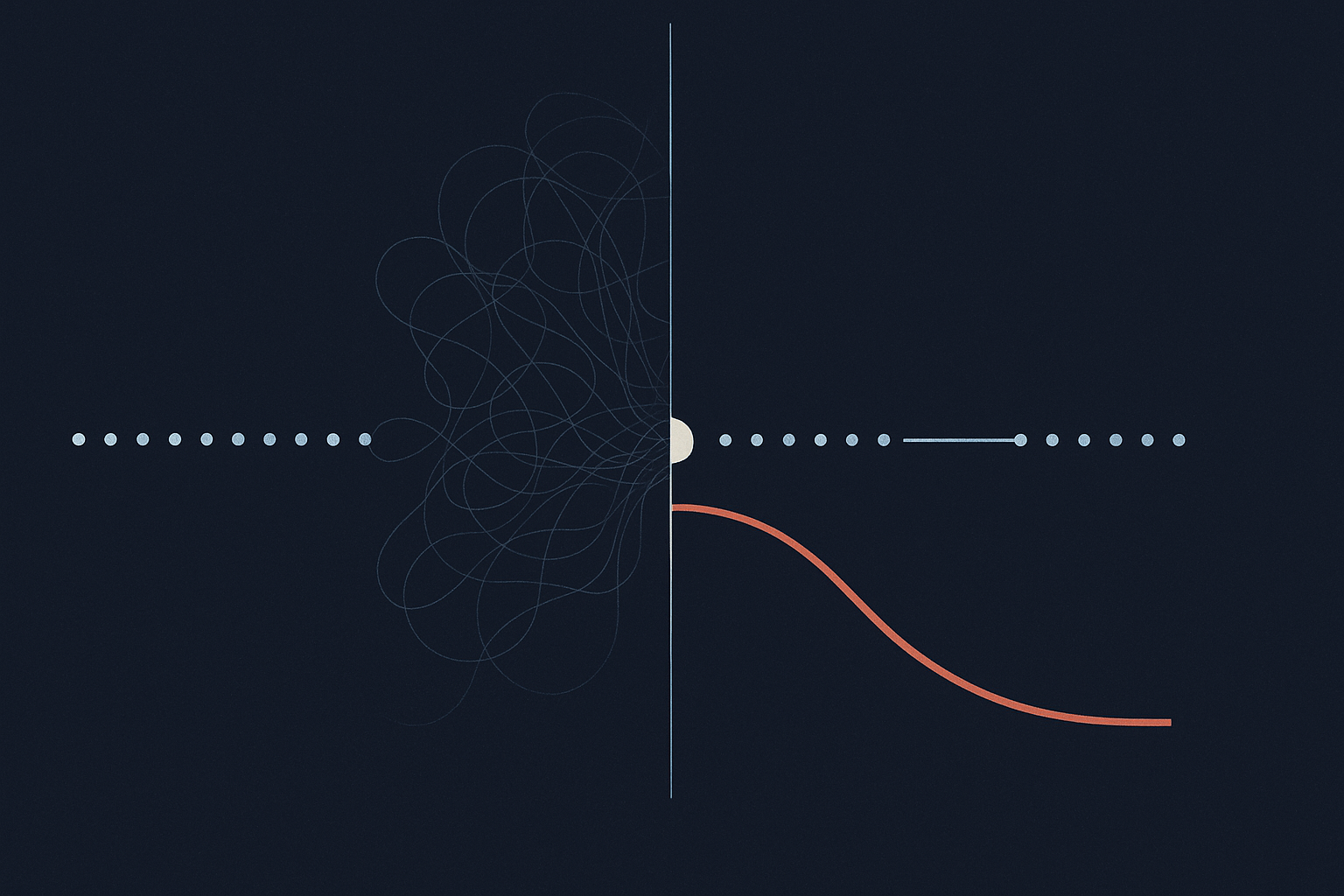
In an hours model, effort leaks into busywork. In an operated model, the metric moves.
A traditional engagement measures activity. Hours logged, tickets closed, decks shipped. Ours measures one thing: the outcome we named before we started. The brain absorbs the routine work, a person owns the calls that matter, and the metric keeps moving as the brain learns.
(001)
Hours model
Effort spent → activity reported → the metric drifts.
(002)
Operated model (ours)
Outcome named → the brain runs the routine path → the metric moves and keeps moving.
What it feels like
Minutes, not days
Decision time once the routine path runs on the brain. Exceptions route to a person who owns the call.
Based on live operating data. Every engagement is scoped to its own outcome.
FAQ
The questions every buyer asks.
Straight answers on how an outcome-scoped engagement actually works.
To a named outcome. Before we start, we agree on the function we'll run and the metric we'll move: claims decided in minutes, same-day adjudication, approval in the applicant's first session. The outcome is written down, measurable, and owned.
Everything it takes to run the function: building and maintaining the Company Brain, the agents doing the routine work, a a person who owns the call for every exception, and continuous improvement. It's a running service, not a project with a handover.
Pick the function you want off your plate. We run a free brain-map session, index how the work actually flows today, and come back with a scoped, measurable outcome, before you commit to anything.
It's built from your processes, your rules, and your data. The encoded knowledge stays yours. If we part ways, you keep a documented, structured, executable map of how your function runs.
The outcome compounds. The brain absorbs more of the work. More decided automatically, fewer exceptions, shorter cycle times, with the same team on your side. Gains show up in the metric we agreed to move, not in extra hiring.
Start with one function. Engagements are scoped function by function. We map it, agree the outcome, and run it. When the metric moves, the next function follows.
Run a function
Stop renting hours. Start running functions.
Pick the function you want off your plate. We map the brain and name the outcome before you commit.